


We ran a survey last summer to get a read on where IT and network operations teams actually stand right now. Not where vendors say they stand, but where the people doing the work say they stand.
We collected 152 responses. Most were manager level or above, most worked at organizations under 500 people, and most came from technology, telecommunications, or education.
Who responded:
41% work in IT/Network Operations roles
65% are manager level or above
60% work in Technology, Telecommunications, or Education
72% work for organizations with fewer than 500 employees
One caveat first, because it changes how you should read the rest. The people we asked were mostly already in our orbit: customers and contacts who think about operations for a living. It’s a picture of teams that already care about this work. Keep that in mind as you go.
Here are a few things that stood out. Read the full report below.
Most teams rate themselves “good enough,” and that’s the risk
Across all five capability areas we asked about, the most common answer was the same: a 3 out of 5. Good. Not poor, not excellent. Very few teams put themselves at either end. Almost everyone landed in the comfortable middle.
Rate your organization’s capabilities in the following areas (1 = Poor, 5 = Excellent).
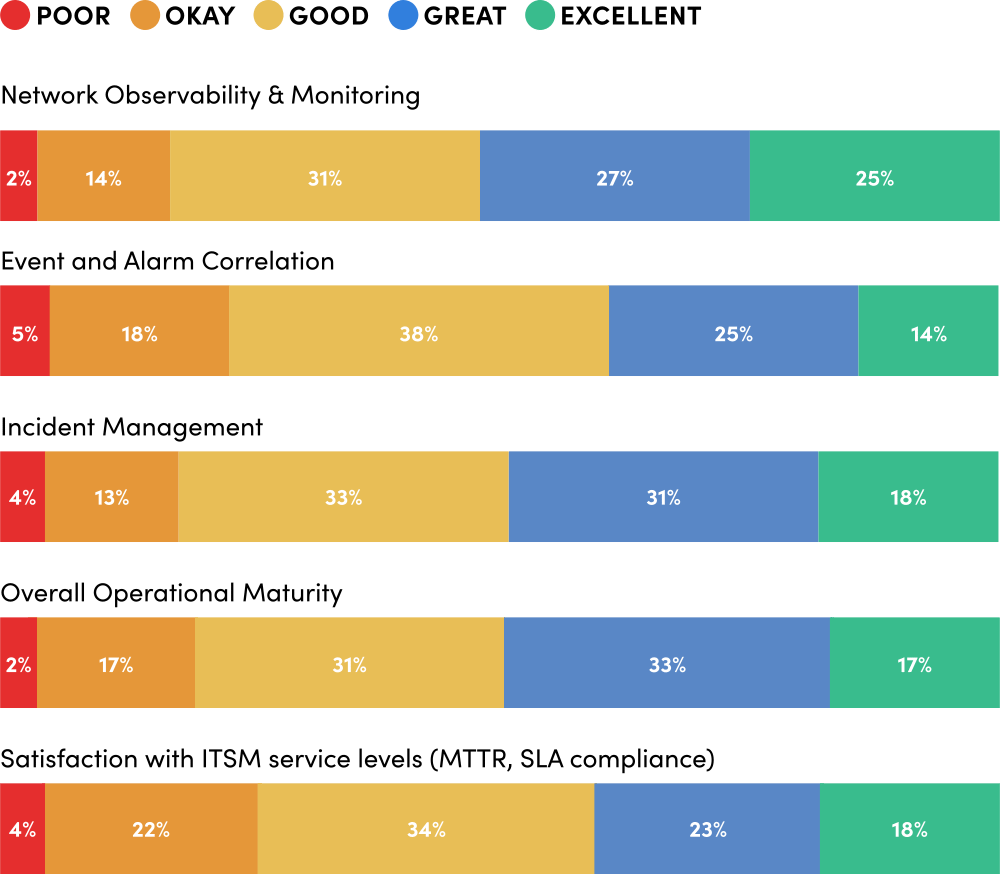
That middle is a stable place to sit, right up until it isn’t. A team that rates itself “good” has little reason to change anything until something forces the issue: a breach, or a senior engineer walking out the door. The plateau holds until it breaks.
I see where it comes from. The “good enough” we run into is usually from teams running services for an internal group. If the experience isn’t great, that’s often fine. They just need to get by. On the service provider side, where the way you run the service lands on a paying client, teams care a lot more. When your users are down the hall, “good enough” survives. When your users are customers, it doesn’t.
Security is the problem today, AI is the problem teams see next
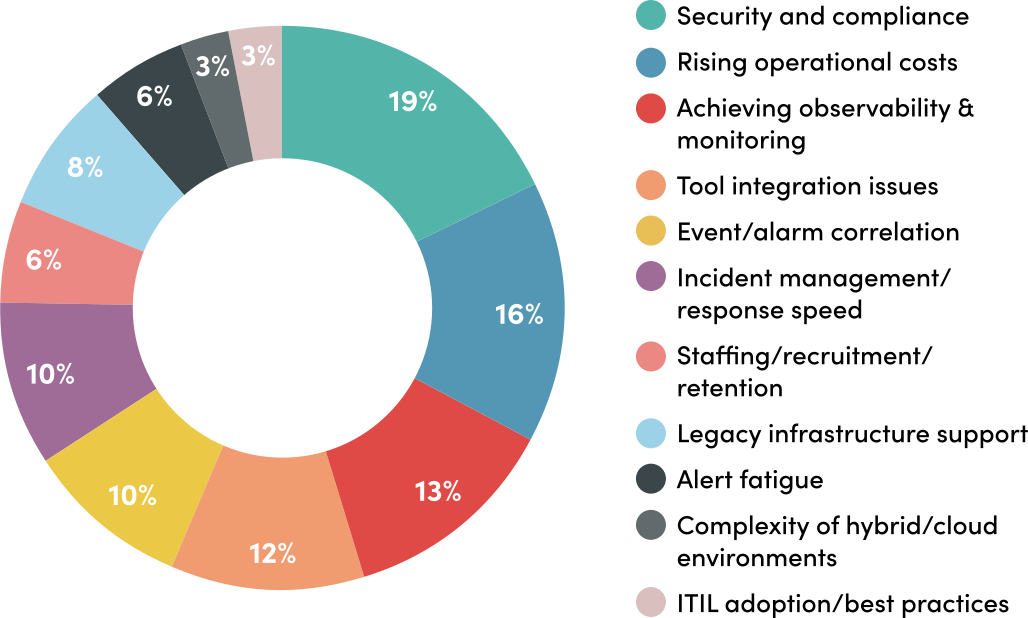
We asked teams to rank their current challenges. Security and compliance sit at the top, followed by rising operational costs and gaps in visibility.
What are your top current challenges in IT/Network operations? (Rank top 5)
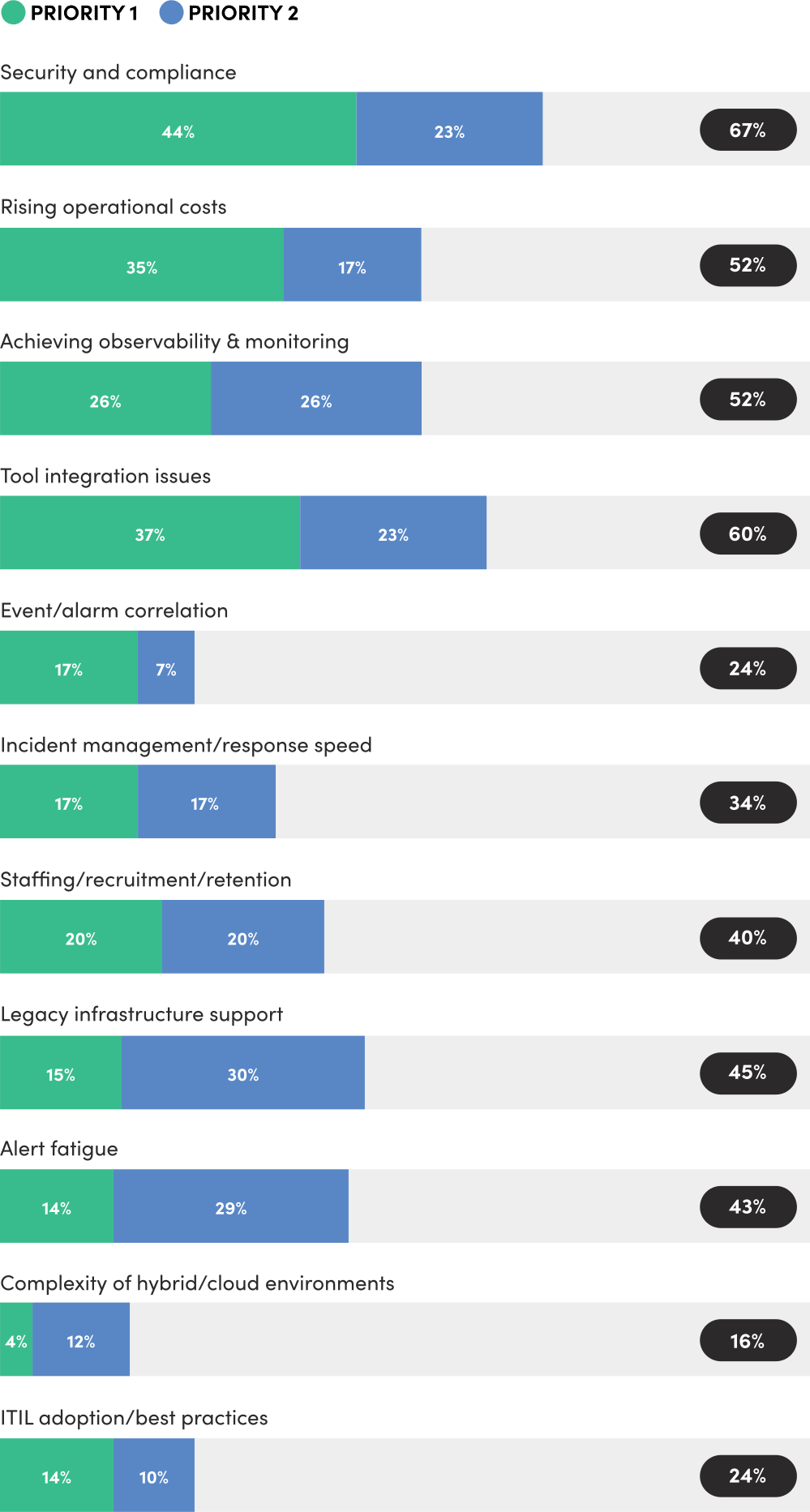
Then we asked what they expect over the next 12 to 24 months. AI adoption climbs up to tie security threats for first. Cost containment slips from second to third.
What do you anticipate as your biggest operational challenges over the next 12–24 months? (Rank top 3)
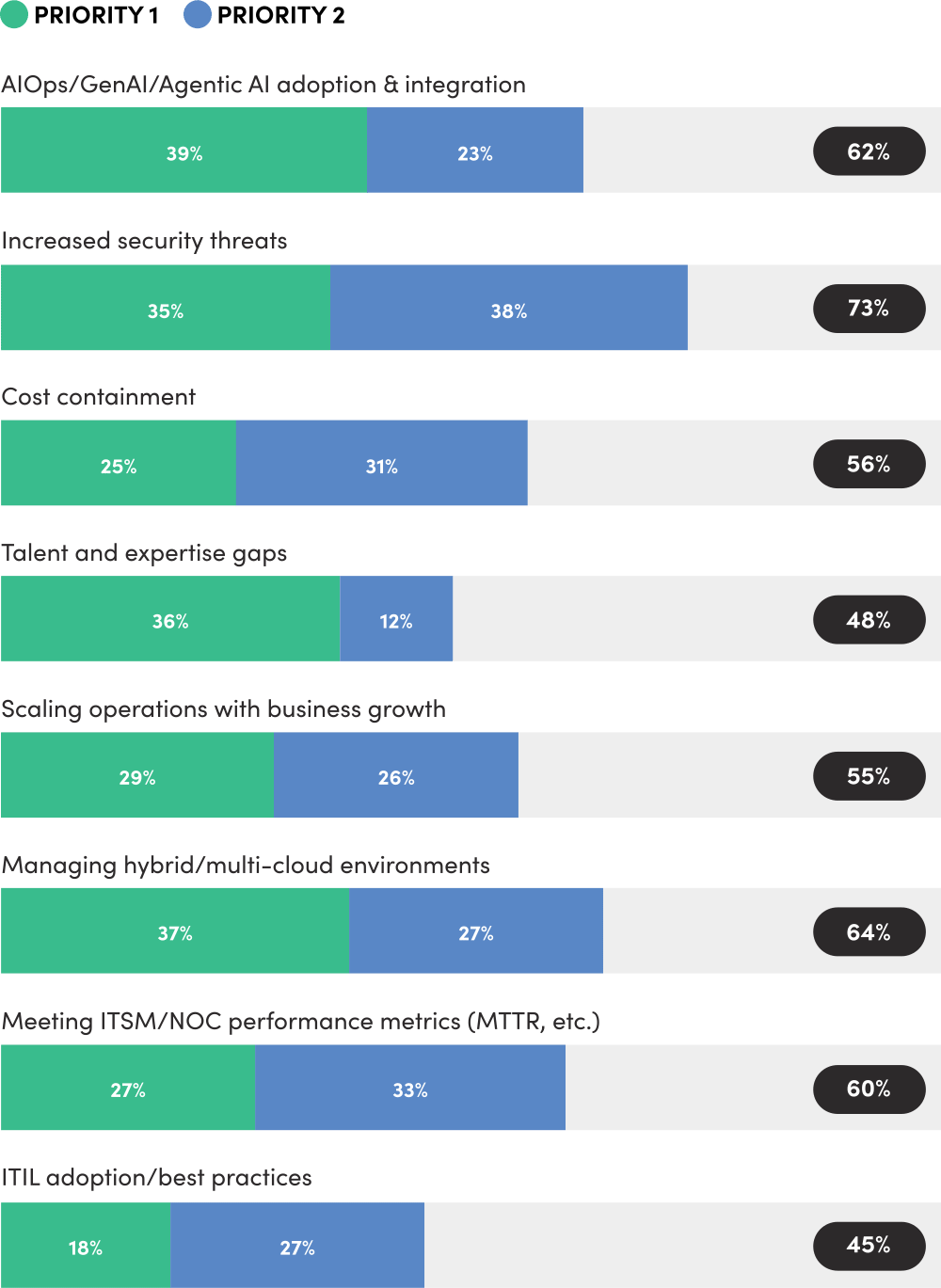
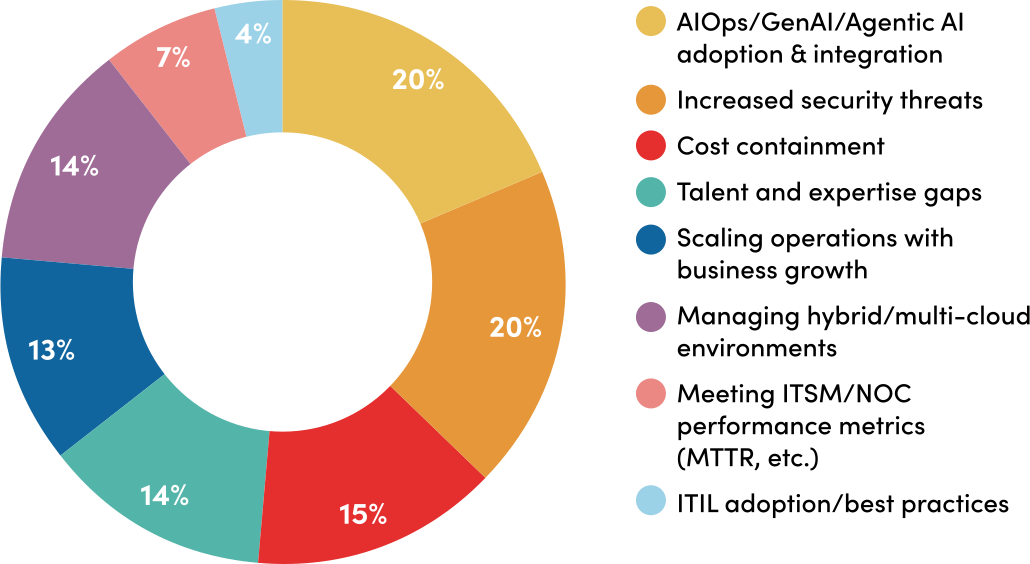
That last part is worth sitting with. Cost is the second-biggest problem today and the third-biggest problem teams expect tomorrow. Either they think efficiency gains are coming, or they have made peace with paying more. The survey doesn’t say which, but my read is that it’s some of both.
Everyone is talking about AI, fewer are using it
AI showed up as the top expected challenge. It also showed up as a source of hesitation. 43% of teams said they are integrating AI in some form. Only 6% called that integration extensive.
Are you currently integrating AIOps/GenAI/Agentic AI into your IT operations (ITOps, ITSM, Network, NOC)?
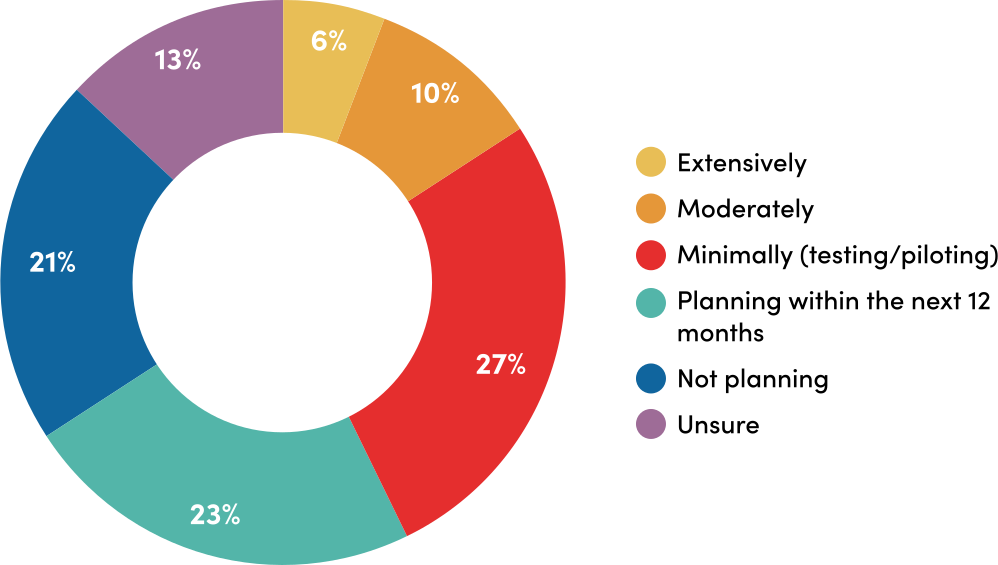
Meanwhile 21% have no plans to adopt it and another 13% aren’t sure. So the thing teams named as their number one concern for the next two years is something a third of them either aren’t pursuing or haven’t decided on. For a lot of teams, AI is a worry more than a project.
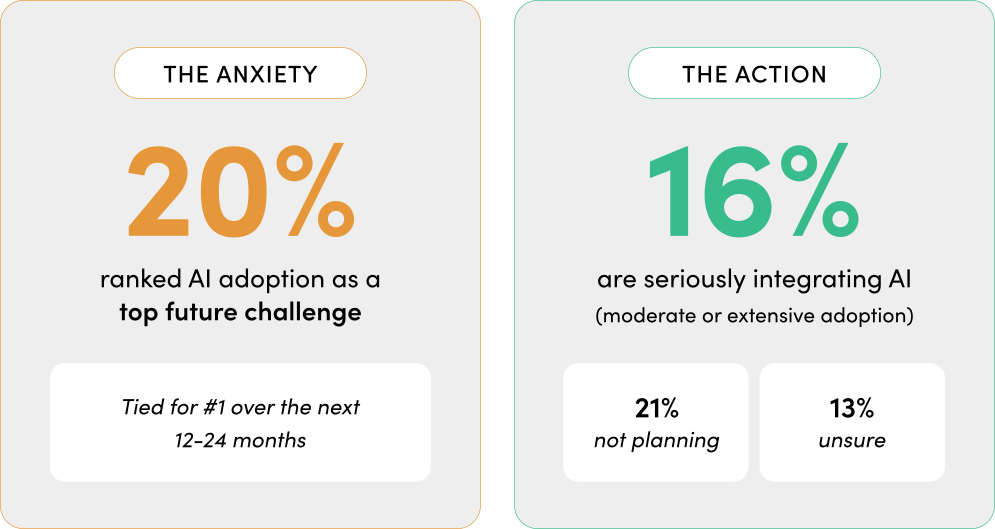
The hesitation is not hard to understand. When we lean AI-heavy on the work we do, some teams get nervous. Everybody knows it is here. A lot of people are just wary that trusting it completely would cause bigger problems, and they don’t want to lose the human judgment and the human eyes on things.
There is a generational split in it, too. On some calls we join, the room is young engineers who want all of it, and they’re surprised we still use people for certain tasks. On others, the team has been in this industry a long time, and they treat AI as an assistant worth having, not a replacement for the person doing the work. Both views are right about something. That tension is what teams are working through.
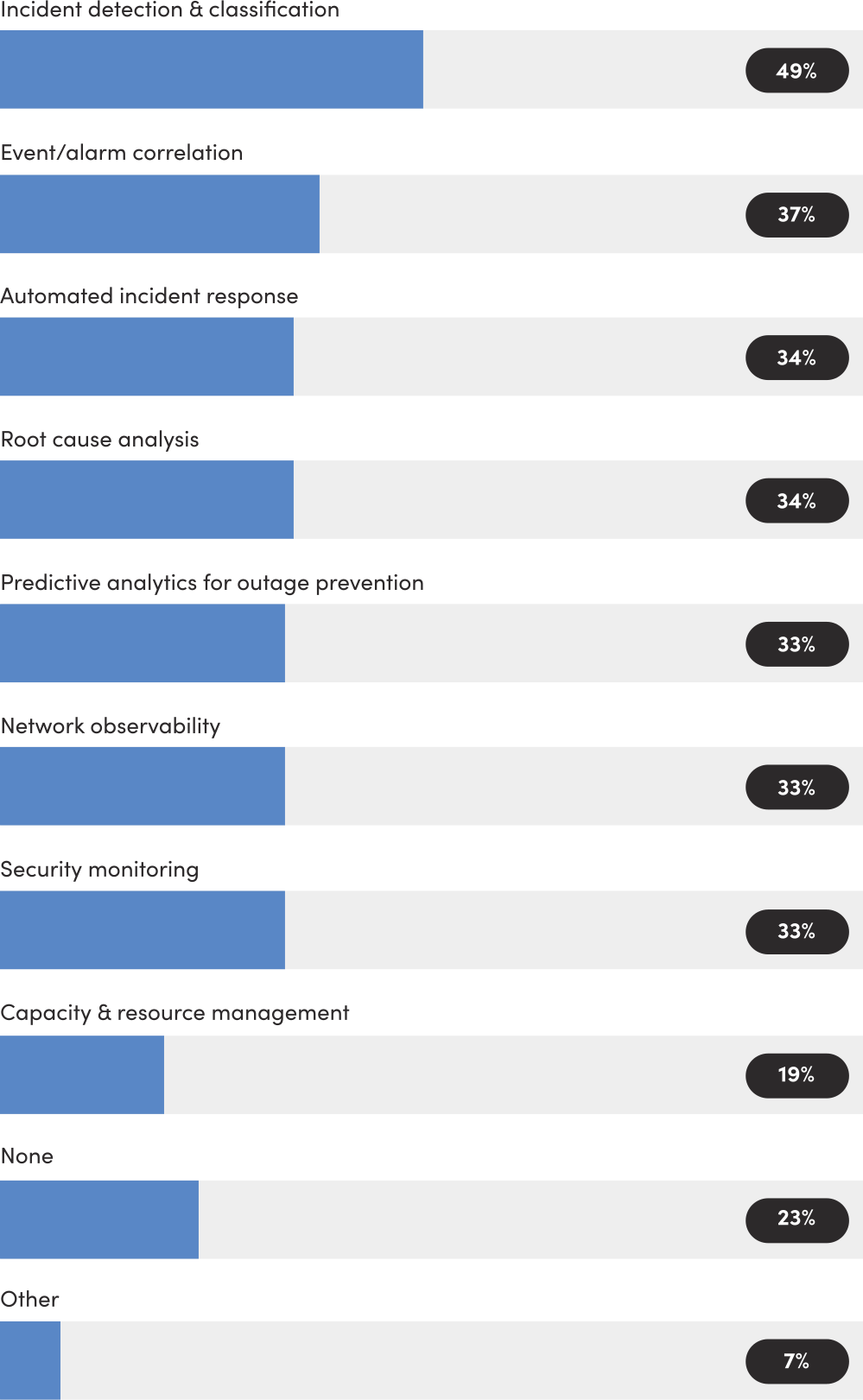
Among the teams that are adopting, incident detection and classification leads by a wide margin. Capacity and resource management trails well behind, which suggests AI isn’t yet trusted for allocation decisions, or that the tools for it aren’t mature enough.
In which operational areas are you using or planning to use AIOps / GenAI / Agentic AI? (Select all that apply)
Three findings that surprised us
We ran the data to see which relationships held up once you control for the rest. Three of them pushed back on the conventional wisdom.
1. AI adopters trade cost worries for integration worries
You might assume the teams adopting AI are further along, with their tooling already sorted. The data says the opposite! Teams adopting AI were 21 points more likely to name tool and platform integration a top challenge. Adoption doesn’t clear the tooling problem; it adds to it. The more AI you bring in, the more systems you have to connect, and the more the seams show.

They were also 27 points less likely to name rising costs a top priority. The read there is a little simpler: teams that have already spent to adopt AI have made their peace with spending to get a result.

One more difference in the same direction. AI adopters were 25 points less likely to prioritize ITIL and formal best practices. It may be that they have already built those foundations, or that they now ask a tool to solve a problem instead of reaching for a framework.
Worth watching either way, because skipping the foundation in a rush to adopt AI is a real risk.

2. The teams that need the most help ask for the least
Teams that rated their own incident management lower were less likely to invest in fixing it, not more. For every point lower a team rated itself, it was 17.5 points less likely to invest in incident-management tools. Teams with higher overall maturity were 24 points more likely to invest.
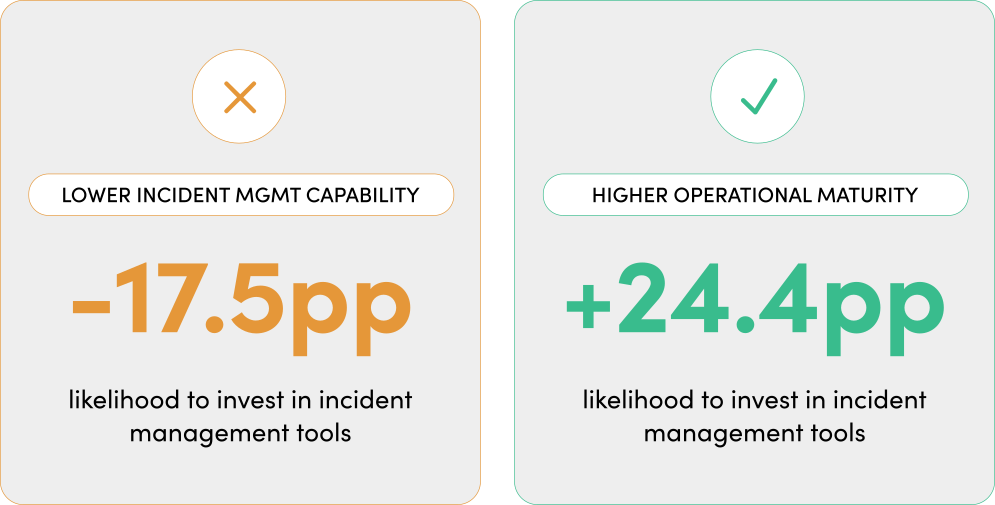
Here is what I see behind that number: A lot of these companies have an internal pool of engineers who spot issues and fix them on the fly, so nothing is structured. There is hesitancy, a sense that dropping into a structured workflow would slow them down instead of just knocking the issue out.
That hesitation is the paradox in one sentence. The teams that would gain the most from structure are the ones most convinced structure would cost them. It usually flips after a major outage, when the thing they skipped becomes the thing that would have caught it.
3. Strong teams outsource more, not less, in the right places
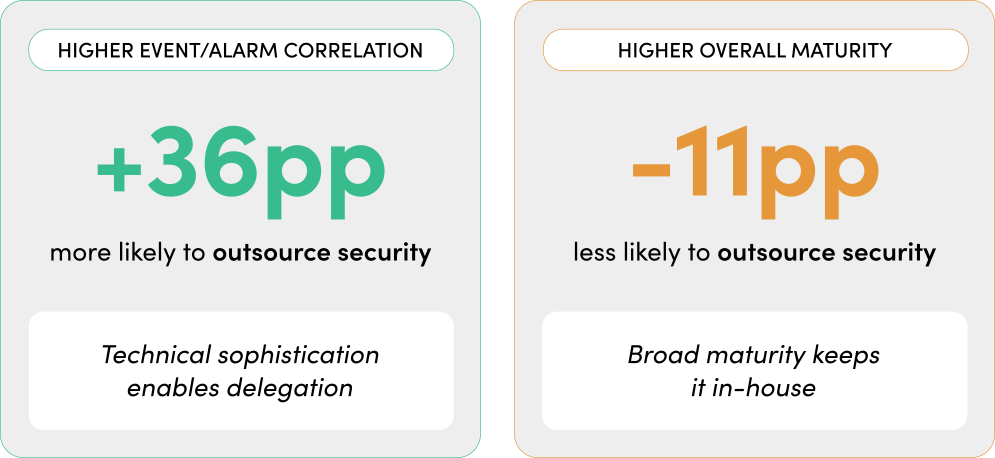
The last surprise. Teams with stronger event and alarm correlation were 36 points more likely to outsource security operations. Internal strength didn’t reduce their appetite for outside help. It actually sharpened it!
A team that runs a tight operation can draw a clean line around the piece it wants someone else to own. But overall maturity cut the other way, making teams 11 points less likely to outsource security. The effect depends on which kind of strength you measure.
Where the money is going, and what teams let someone else run
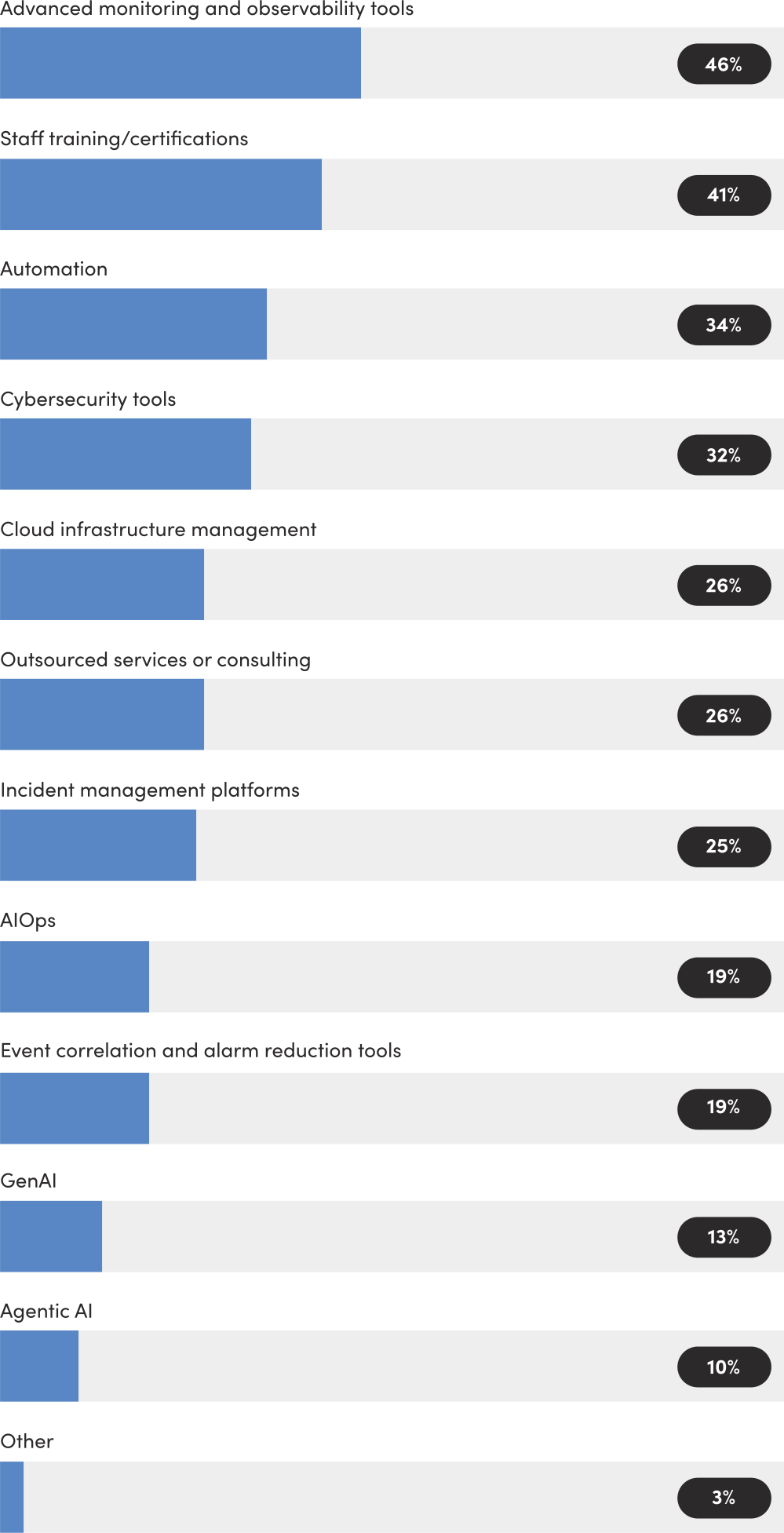
When we asked where teams are investing, two answers led: monitoring tools and staff training. Teams are putting money into the systems and the people at the same time. Specific AI purchases, AIOps and the rest, ranked lower, even with AI topping the list of future concerns.
What IT/Network capabilities/tools are you actively investing in? (Select all that apply)
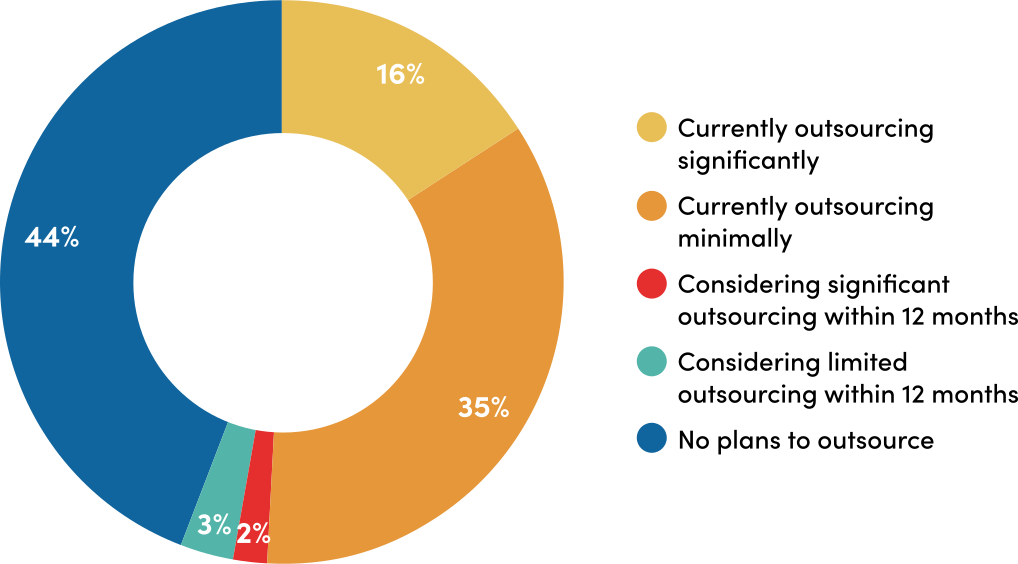
On outsourcing, 51% hand off some part of operations, though most call it minimal.
The most common thing to outsource is 24×7 monitoring and the NOC. AI and automation sit at the bottom of the outsourcing list at 6%, a strange place for the thing everyone says they’re most worried about.
Which areas of IT/Network operations are you currently outsourcing or considering outsourcing? (Select all that apply)
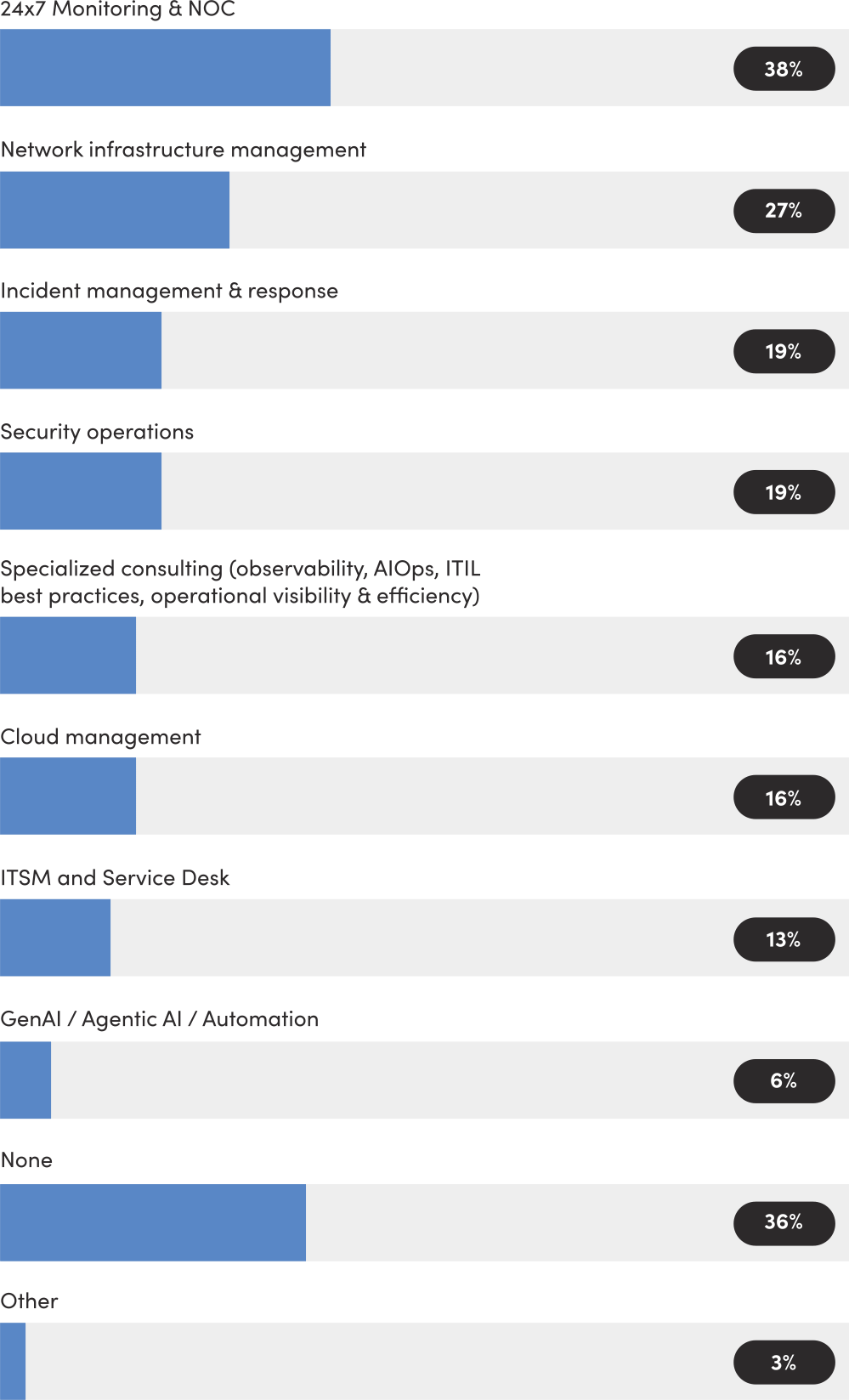
Part of that gap is timing. Part of it is that “outsourcing AI” no longer means what it used to. By that measure the 6% undercounts reality. Most teams using AI are already renting it from someone else. They just don’t file it under outsourcing.
What we take from this
The “good enough” plateau is the widest finding and the quietest risk. Most teams are fine, and fine is comfortable enough to keep them from moving until something makes them.
The AI gap is real, and it is an opening. AI is the top stated worry and most teams aren’t acting on it yet. The teams that move earlier, and carefully, will have room the rest won’t.
The capability paradox is the one worth checking in yourself. If your honest read is that you’re weak somewhere that matters, the instinct to leave it alone is the exact instinct to question. The teams that break the pattern are the ones who say “we’re not good at this, and it matters, so we’re fixing it” before an outage says it for them.

About INOC, a service of Xerox IT Solutions
INOC is an ISO 27001:2022 certified 24×7 NOC and an award-winning global provider of NOC Lifecycle Solutions®, including NOC support, optimization, design, and build services for enterprises, communications service providers, and OEMs. INOC solutions significantly improve the support provided to partners’ and clients’ customers and end users.
INOC assesses internal NOC operations to improve efficiency and shorten response times, and provides best practices consulting to optimize, design, and build NOC operations, frameworks, and procedures. Proactive 24×7 NOC support is provided with several options, including North America, EU, or APAC only or global integrated NOCs. INOC’s 24×7 staff provides a hands-on approach to incident resolution for technology infrastructure support.
Learn more about our NOC support and NOC operations consulting services. Get in touch to start the conversation. We’d love to talk NOC.